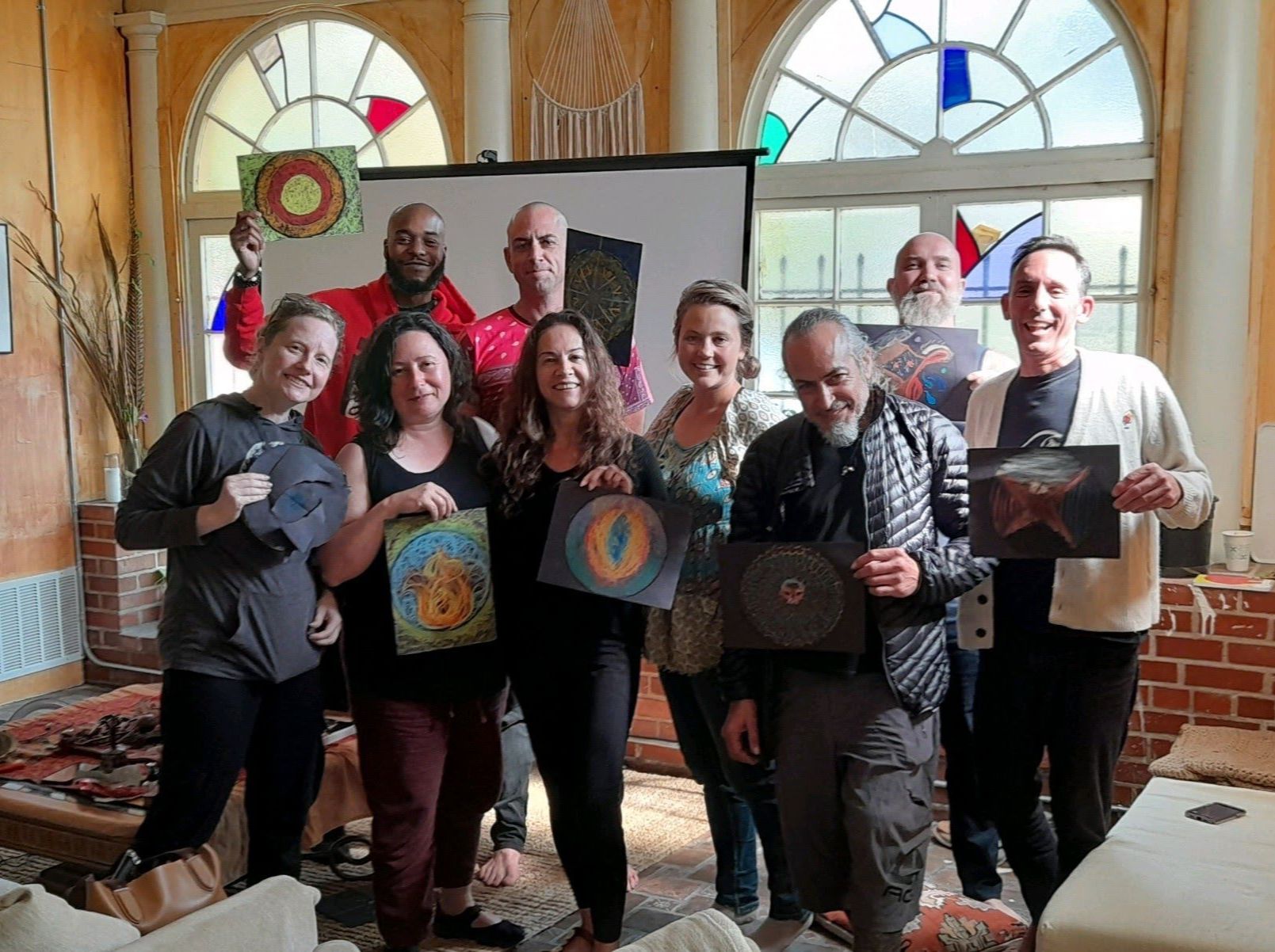
Reflections on Opening the Way Moving Through Preparation and “Ghafla” (Distraction) into Sacred Presence
Dec 15, 2025
Steps Towards Divine Experience
Entheogen-assisted meditations offer a wide range of diverse experiences, with related opportunities and challenges for religious preparation, practice, personal growth and moral / emotional healing. Depending on how we relate to these experiences, they may become “ghafla” - buzzing flies of distraction that block us from the presence of divinity - or they may become useful steps on a Sacred path.
Some entheogen-assisted meditations may cultivate increased personal, social or religious sensitivity and compassion. Others may develop strength, tolerance and expand emotional, moral or religious capacity. Finally, some experiences may bring us into Sacred or Divine presence, potentially bringing insight and a “peace that passeth all understanding”.
Challenge and bliss
Challenging physical (dietary or other) or emotional / spiritual (in meditation) experiences can provide opportunities to practice self-reflective learning and moral healing processes, growing sensitivity and compassion for ourselves and others. These correspond with practices that various therapeutic or religious traditions may identify - as trauma bodies, un-useful contracts, sanskaras, sins, poisons, or demons. Challenging experiences and physical/dietary issues can become distracting if approached with either avoidance or attachment.
Pleasant and blissful experiences, while valuable steps on the spiritual path, can also become distractions. This is particularly true if practitioners develop compulsive seeking behaviors or shame responses around them. Meditation practices may offer valuable frameworks for understanding these processes (Heuschkel, et al, 2020). Modern therapeutic methods similarly recognize the importance of releasing unconscious contracts and inherited patterns that limit religious growth. The distinction between spiritual bypassing and genuine transformation becomes crucial here. Authentic healing grows from effective engagement with and transformation or release of difficult material, which can help expand emotional, moral and religious capacity (Kennel, M., 2021).
Immanence, transcendence, divinity
Perhaps the most transformative experiential category involves awakening experiences, characterized by direct encounters with Sacred or Divine presence..These may be experienced as profoundly mystical, with a range of impacts. These include senses of deep insight, lightening of emotional burdens, new or renewed sense of moral purpose, reduced fear of death, and others. Even brief, temporary experience of Divine presence can be helpful to religious practitioners. Compelling research from institutions like Johns Hopkins has documented the beneficial potential of mystical experiences, particularly in treating conditions like depression, anxiety, and addiction (Griffiths et al., 2016; Johnson et al., 2014).
Reported Sacred and/or Divine experiences are commonly beneficial but may also bring potential risks, like grandiose inflation or depressive dark night periods (Bache et al, 2019). These experiences invite practitioners to exercise disciplined religious practice, for example, to move beyond both challenges and pleasures, incorporating lessons while transcending attachment to any particular state. One form of practice encouraged by Johns Hopkins researchers lies in learning to move "in and through" these various states rather than becoming fixed upon them.
Pastor Bob's Tips for Awakening Practice
One form of effective religious practice that I’ve experienced requires cultivating specific persistent qualities of attention and response to the full spectrum of experiences that arise. The foundation of”mindfulness” rests upon developing calm, curious, clear, quiet, and attentive awareness. Practitioners learn to attend to direct sensation throughout a meditation, focusing on mindful breathing patterns if experiences become unfocused or overwhelming. The essence of this approach involves "doing nothing attentively, clearly and well" while maintaining awareness, compassion, and presence. Mindfulness and related methods such as the following have been useful to my practice.
Learning through Challenges
When confronted with challenging experiences, the practice shifts toward inquiry and learning. Key questions include: "What am I learning from this experience? What is this teaching me? How may I grow?" At the same time, grounding the experience through attention to bodily sensation provides calming stability. Cultivating the capacity for letting go (non-attachment) allows practitioners to release attachment to past experiences and integrate lessons. FInally, challenging experiences may guide one towards emotional, moral, even practical healing and growth. Integration of these experiences can involve making life changes. Give time after assisted meditations to make sure life changes move from calm, grounded intentions that benefit from the insights your meditations and supportive community bring.
Bliss and Impermanence
Pleasant experiences require different skills, particularly anchoring and grounding to maintain perspective. Gratitude, contextual grounding and integration within experienced community can help prevent grandiose “inflation”, while non-attachment and letting go can help practitioners recognize the transient nature of all states and avoid compulsive seeking of particular experiences.
Divinity and Presence
Finally, experiences that might be identified as Sacred or Divine call for full presence and attention to the immediate experience. Grounding and maintaining context remain important to integrate these profound states appropriately. Beyond simply remaining fully present, experiencing with clarity and discernment, the same spirit of inquiry applies: "What am I learning? What is this experience teaching? How may I grow from this encounter? Why / how do I consider this experience to be Sacred or Divine? How may I usefully integrate this experience into my life?"
Conclusion - Focusing on Growth of Divine Presence
My personal goal for religious facilitation and practice within Sacred Garden Community Church (SGC, learn more at Sacredgarden.life) could be expressed as helping move through attachments to any particular state or substance, to integrate, transform, release those issues that block us - opening the way to direct experience and sustained recognition of Divine presence that informs and transforms everyday life.
Moving through challenging, blissful, transformative and other experiences toward Sacred Presence requires skillful navigation and practice. By developing appropriate responses to various categories of experience, practitioners can avoid common pitfalls while maximizing the transformative potential of ancient and modern / post-modern wisdom.
References
AI assist (Claude) on document grammar and formatting. All references known and reviewed.
Bache, C. M. (2019). Mysticism and psychedelics: The case of the dark night. Journal of Transpersonal Psychology, 51(2), 173-190.
Griffiths, R. R., Johnson, M. W., Carducci, M. A., Umbricht, A., Richards, W. A., Richards, B. D., ... & Klinedinst, M. A. (2016). Psilocybin produces substantial and sustained decreases in depression and anxiety in patients with life-threatening cancer: A randomized double-blind trial. Journal of Psychopharmacology, 30(12), 1181-1197. [Summarized in this accessible article - Johns Hopkins Hub. "Hallucinogenic drug found in 'magic mushrooms' eases depression, anxiety in people with life-threatening cancer." The Hub, December 1, 2016. https://hub.jhu.edu/2016/12/01/hallucinogen-treats-cancer-depression-anxiety/]
Heuschkel, Kristin, and Kim P. C. Kuypers. "Depression, Mindfulness, and Psilocybin: Possible Complementary Effects of Mindfulness Meditation and Psilocybin in the Treatment of Depression. A Review." Frontiers in Psychiatry 11 (2020): 224. https://doi.org/10.3389/fpsyt.2020.00224
Kennel, M. (2021). Religious Studies and Internal Family Systems Therapy. Implicit Religion, 23(3), 293–304. https://doi.org/10.1558/imre.41249
Johnson, M. W., Garcia-Romeu, A., Cosimano, M. P., & Griffiths, R. R. (2014). Pilot study of the 5-HT2AR agonist psilocybin in the treatment of tobacco addiction. Journal of Psychopharmacology, 28(11), 983-992. Accessible via NLM.
Luna, L. E. (1984). The concept of plants as teachers among four mestizo shamans of Iquitos, Northeastern Peru. Journal of Ethnopharmacology, 11(2), 135-156. Accessible in ScienceDirect.